脱颖而出
营销文案引争议 德芙深夜发文致歉并启动全面整改_我的网站

一 |
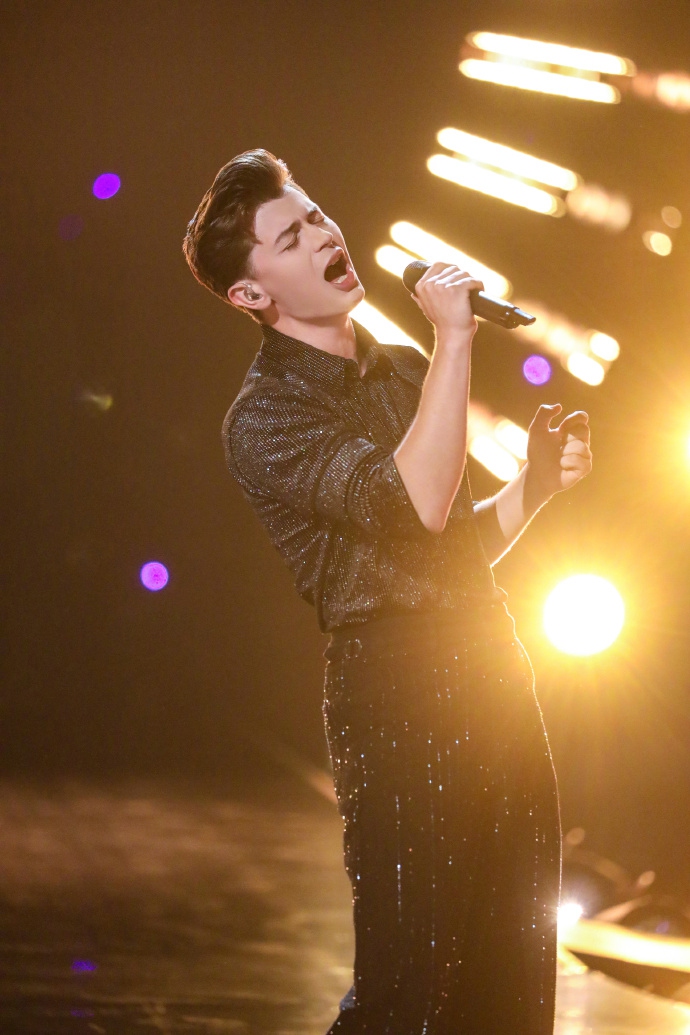
Elliot James Reay sings on stage at a Chinese live show. Photo: Courtesy of UMG
Elliot James Reay could have copied every other Western act and sung a Taylor Swift cover. Instead, he took 1950s rock'n'roll to a live TV show where autotune is switched off and discovered a version of fame that Britain has forgotten.
Elliot James Reay was traveling in the US, trying to finish a song, when his manager called. There was an invitation to join
Singer 2026, a prime-time live music show in China. Reay didn't hesitate. He had traveled the world before he was a full-time musician, but had run out of money before reaching China. "I went everywhere but China," he said while sitting for an interview with the Global Times, sitting in the office of his label in Beijing, from which the Palace Museum can be seen not far away.
Reay is, in the West, a very 2020s kind of artist. He began posting short covers on short video platform TikTok in 2019; during the UK Covid lockdown, he chose to focus on growing his fan base. He now has millions of followers across platforms, and his debut single notched 10 million views before it was even released. In the British industry, this is both a leg-up and a trap. "You can have all the followers," he says, "but they don't guarantee people will buy tickets."
In China, that equation flipped.
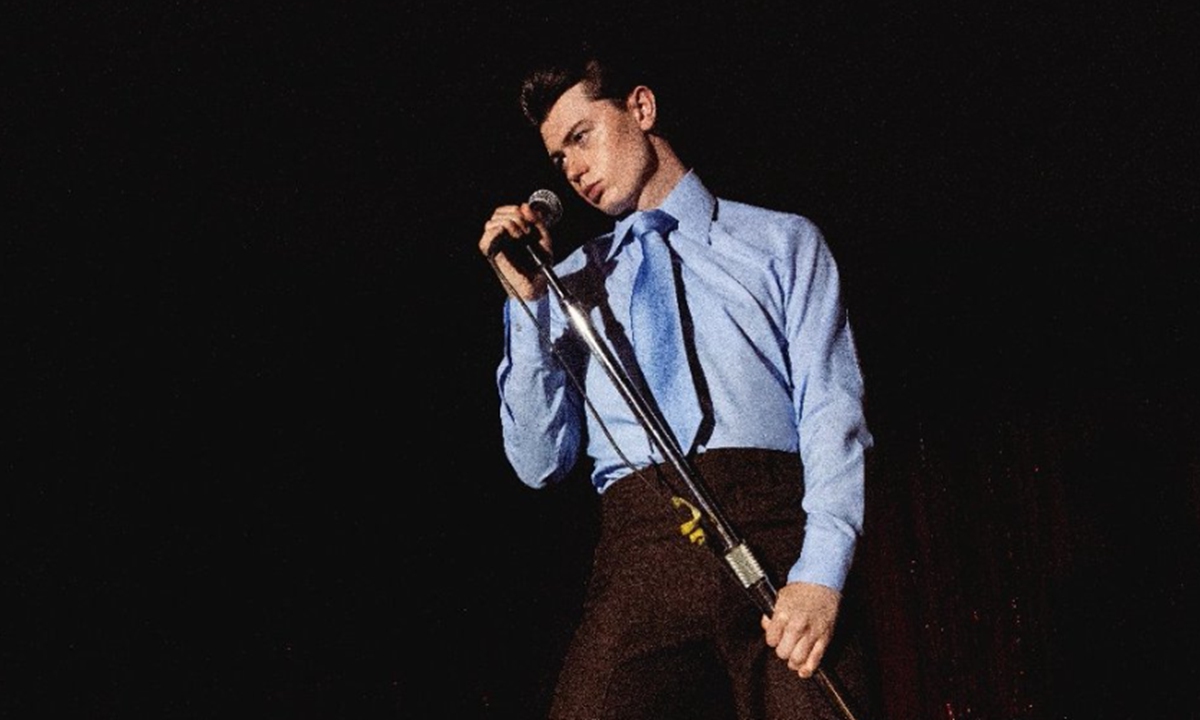
Elliot James Reay sings on stage Photo: Courtesy of UMG
Nervous againThe Chinese show,
Singer 2026 is broadcast completely live, with no pitch correction. For Reay, who had played enough small gigs to feel comfortable in his own skin, it was a shock. "I haven't felt nerves in a long time," he says. "But I've never been in a competition before. To have my singing judged against other people made me really nervous."
He watched Week One's performances from the wings and saw why. "The standard was terrifying," he says.
But the format, he admits, is something the UK no longer has: a televised singing contest that treats vocal ability as a public event, not a pre-packaged product. "It made me feel like I just started my career again."
Reay's lane is retro. Not as pastiche, but as lineage. He wears the silhouette of Elvis Presley, sings in the grain of 1950s pop, and writes songs that sound like they were cut from a Sun Records demo. He could have sanded it down for Chinese audiences, but he didn't.
"Someone has to start the wave before you can see it," he says. Among the songs he performed were "Unchained Melody" and his original track "I Think They Call This Love," which he co-wrote with his girlfriend. He points out that the Beatles still sit next to Taylor Swift on the radio, and that pop started in the 50s. "It's the foundations of pop," he says.
Learning to feel the wordsIn the final, Reay performed a bilingual version of the Chinese song "Hou Hui Wu Qi" (The End of the World). It was his first time singing in another language. He spent five days learning the Chinese lyrics, listening to the original on loop.
"There are sounds in Chinese we just don't have in English," he says. "I couldn't hear the difference at first. I'd say it, and Helen (his translator) would say, 'No.' I thought I was saying the same thing." Eventually, he stopped trying to hear it and started trying to feel it. "It became more about how it felt to say it. How I place my tongue in my mouth," he says.
He didn't understand the meaning until day three. "Helen gave me a card with the Chinese characters and the English translation. It's very poetic," he says. The performance received a strong reaction, with it being called an attempt at "cultural fusion."
He had saved his own original, "I Think They Call This Love," co-written with his girlfriend, for the same final. He had held the song back deliberately. "I knew that any week was my last week," he says, "but I knew that if I made it to the grand final that I had to do it then." He had no idea it would become the last song of the entire show.
When he finished, he walked straight off stage, took his girlfriend's hand, and the two of them left together, a moment that trended on Chinese social media that night.
The song is about the exact point they realized they were in love; it was also the first track of his career he fully believed in and pushed into the world. Having her there to watch it live, after weeks of her only seeing performances on a phone in a hotel room, "tied the whole thing in a bow at the end."
A touring musician, not a TikToker Reay is open about the tension between his origin story and his ambition. "I don't want to be a TikTok celebrity," he says. "I'm a musician. I want to tour."
The platform gave him an audience, but it also boxed him in. He remembers friends who wrote incredible songs during lockdown, while he chose to build a fan base. Now, he says, some of those friends have had to stop writing and make TikTok videos instead.
China, he says, gave him permission to be both an online creator and a live performer. Universal Music, his label, didn't push him to chase trends. "They never said, 'Do this, do that,'" he says. "They supported what I wanted to sing, and then they made it the best version they could."
Before Reay, a string of international artists had already found warm receptions and career-shifting opportunities in China. Kazakhstani singer Dimash Kudaibergen, Malaysian star Shila Amzah, US country artist Mickey Guyton, British vocalist Jessie J, and French singer-songwriter Joyce Jonathan all won large Chinese audiences through high-profile television appearances and live performances, each using the platform to open a new chapter in their careers.
He's already planning a return. He wants to bring a tour. He wants to buy the traditional instruments he saw on set and take them home to England. "I'm going to learn how to play them," he says, "and maybe put them into my music."
The advice he'd give other Western artists looking East is to stay loyal to yourself. "Be yourself," he says. "It's very easy to want to change yourself to fit into a market, but at the end of the day, if you stay true to yourself, you'll be happy."
"In the UK, I felt like I needed to do other things to make other people happy," he says.
"If I hadn't stopped doing that, I wouldn't be sitting here. I wouldn't have done the show. My whole journey would be different," he says.
。 近日,德芙官方旗舰店一则短视频营销文案因价值观不当引发网友争议。

二 | 8月25日晚间,德芙官方账号@德芙悦时刻 发布致歉声明,承认内容审核疏漏并公布整改方案,就此翻车营销内容向公众致歉。据网友爆料,涉事短视频为推广德芙七彩礼盒,配文讲述消费者背着男友与暧昧对象分享礼盒的情节。

三 | 该文案刻意渲染暧昧擦边情节,违背正向婚恋价值观,被网友批评导向低俗、三观不正,严重影响品牌观感,迅速引发网络热议,相关话题接连登上热搜。

四 | 事件发酵后,不少网友表示,主打温情浪漫的德芙采用低俗博眼球的营销方式,突破品牌营销底线,难以被消费者接受,呼吁品牌重视内容价值观导向。德芙官方在致歉声明中说明,涉事视频由第三方合作运营团队创作发布,因未严格执行品牌审核流程,出现内容偏差。品牌方强调,内容出自官方渠道,自身负有不可推卸的管理责任,不推诿相关问题。官方坦言,此次文案表达与价值导向存在严重偏差,背离品牌真诚、温暖的传播理念,对公众造成不良观感,并就此向广大消费者诚恳道歉。针对本次事件,德芙已第一时间下架涉事短视频。后续将开展专项人员培训,从严管理第三方合作团队,完善并严格落实内容多级审核机制,堵塞内容监管漏洞,杜绝同类失范营销内容再次出现,优化消费者品牌体验。本次营销翻车也为快消行业内容营销敲响警钟。行业营销需摒弃“流量至上”的擦边套路,坚守正向价值观,贴合大众主流认知,才能兼顾传播效果与品牌口碑。

五 | 公众也将持续关注德芙后续整改落实情况。
Current article:http://k7tktc.mexuanmeixuyaopinzheng.shop/news/20260826_567692.html
Published on:03:12:28


